Why Barramundi Sticks to the Pan and How to Prevent It
Why Barramundi Sticks to the Pan and How to Prevent It
Barramundi sticking to the pan is frustrating, especially when a beautiful piece of golden skin stays behind while the fillet tears apart. The good news is that this is usually not a problem with the fish. In our experience, it comes down to moisture, pan heat and giving the skin enough time to do its job.
Skin-on barramundi is well worth cooking. The skin helps protect the tender flesh, brings extra flavour and, when cooked properly, gives you that lovely crisp contrast with soft, flaky fish. Early spring is a great time for lighter seafood meals, whether you are cooking inside or putting together an easy outdoor dinner. A few simple steps make all the difference: start with quality fish, thaw it carefully, dry the skin, heat the pan and wait for the fillet to release.
Why Barramundi Sticks Before It Meets the Pan
Water is the first thing we look at when fish sticks. Ice crystals from freezing, condensation after thawing and a damp skin surface all create steam in the pan. Instead of the skin making direct contact with hot oil, it sits in moisture. That slows browning and makes the fish more likely to cling.
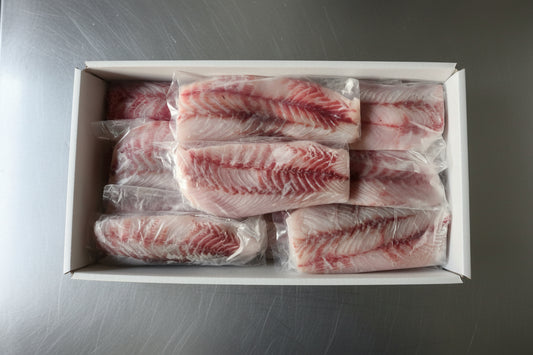
For snap-frozen barramundi, we recommend thawing fillets in the fridge. Once thawed, take them out of the packaging and pat the skin dry with paper towel. Do not be shy here, dry skin is the starting point for crisp skin.
Heat matters just as much. A pan that is too cool gives the fish proteins time to bond to the cooking surface. On the other hand, an overly hot pan can scorch the skin before it has had a chance to crisp properly. Medium to medium-high heat is usually the sweet spot, with a short preheat before the oil goes in.
The hardest part can be doing nothing. Freshly placed fish often sticks at first, then naturally releases once the skin has browned. Avoid poking, shaking or trying to flip it too early. A thin fish slice should slide underneath with little resistance when the skin is ready.
Choose Skin-on Barramundi Fillets That Cook Beautifully
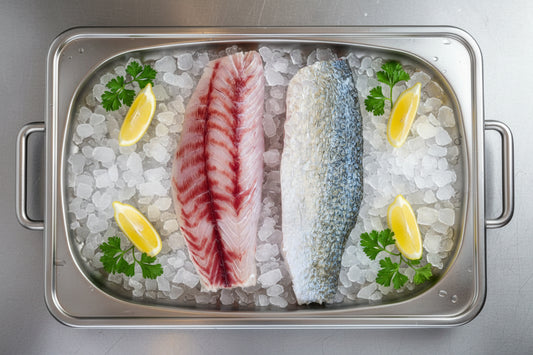
Good pan cooking begins well before dinner time. When you buy barramundi skin-on fillets, look for firm flesh and skin that is intact, evenly trimmed and free from large tears. The fish should have a clean, fresh aroma, while frozen packaging should be sealed and secure.
An undamaged skin surface has a better chance of browning evenly. Torn skin can catch on rough spots in a pan and may break apart when you turn the fish. Even fillets are also easier to cook because one end is less likely to overcook while the other is still catching up.
Snap-frozen seafood can be an excellent choice. When fish is frozen promptly after processing and thawed with care, it can arrive in your kitchen in great condition. What matters most is avoiding repeated thawing and refreezing, then preparing the fillet properly when it is time to cook.
Before cooking, we suggest checking these details:
- Skin that is smooth, intact and attached firmly to the flesh
- Flesh that feels firm rather than soft or watery
- Packaging with no obvious damage or signs of thawing
- Clear information about where and how the fish was caught
When you buy barramundi skin-on fillets from a trusted Australian supplier, traceability gives you more confidence in what is on your plate. It also helps us keep the connection clear between the catch, processing, snap-freezing and the meal you prepare at home.
Set up the Pan for a Crisp, Clean Release
The right pan helps, but it does not need to be fancy. We find that a heavy-based frying pan gives the best, most even heat. Cast iron, carbon steel and a quality non-stick pan in good condition can all work well. What you want to avoid is a thin pan with uneven hot spots, which can burn one patch of skin while another patch stays pale and stuck.
Here is the simple sequence we use for skin-on barramundi:
- Preheat a dry pan over medium to medium-high heat
- Add a light coating of neutral oil with a high smoke point
- Place the fillet skin-side down, laying it away from your body
- Press it gently with a fish slice for 10 to 20 seconds to stop curling
- Leave it alone until the skin browns and releases easily
Most of the cooking happens skin-side down. Watch the sides of the fillet as the flesh changes from translucent to opaque. Once the skin is crisp and the fish lifts cleanly, turn it only briefly if the top needs finishing.
Butter, lemon, garlic and herbs are beautiful with barramundi, but we add them near the end. This keeps the butter and garlic from burning while the skin has time to become crisp. A little patience is much more useful than a lot of flipping.
Wild Gulf Barramundi Carries Care to the Plate
Wild-caught and farmed barramundi can both be delicious, though their origin, diet, fat content and fillet shape may vary. Farmed barramundi are raised in managed conditions and fed formulated diets, which can provide consistent supply and more uniform fillets throughout the year. Wild barramundi feed naturally in the Gulf environment, and their flavour, fat level and shape can reflect the season, water and food available where they were caught.
Choosing between them often comes down to what matters most to you. Farmed fish can offer dependable availability and consistency, while wild-caught fish offers a direct connection to a particular fishery, season and place. We do not think one type automatically cooks better than the other. Dry skin, steady heat and patient timing are still the foundations of a clean release from the pan.
Our family fishing operation supplies wild-caught barramundi and other seafood from the Gulf of Carpentaria. We process and snap-freeze our fish with care, so you can understand more of what happened before a fillet reached your kitchen. That traceability is part of why we value skin-on fish, because it keeps the character of the catch present right through to the plate.
Gill net fishing in the Gulf operates under licence conditions and fishery rules designed to protect fish stocks, sensitive areas and other marine life. Operators must use approved gear, including rules around net dimensions and mesh size, and fish only in authorised areas during open seasons. Legal size limits mean fish outside the permitted range must be released, while area and seasonal closures protect breeding fish and important habitats at key times.
On the water, responsible fishing requires more than setting a net. Nets are actively attended and checked, allowing fishers to retrieve their catch promptly, release non-target animals where possible and respond quickly to any wildlife interaction. Catch and effort are recorded through required reporting and logbooks, creating a record of where fishing occurred, what was caught and how much effort was used. These safeguards give fisheries managers information to monitor stocks, enforce rules and adjust settings when needed.
Last Water is our tribute to the people still working these waters. The name speaks to the final stretch of the tide, the last water before the change, when experienced fishers read the current, the weather and the country around them. It also honours the remaining commercial fishers of the Gulf, whose practical knowledge has been built through early starts, hard seasons and generations of care for the sea.
For us, the name carries the story of an industry that has fed communities while relying on healthy water for its future. Every carefully handled fish represents the work of fishers who know that looking after the Gulf is not separate from making a living from it. Respect for the fish and the water should carry through to the way we cook it, too.
Put These Steps to Work at Your Next Meal
For a crisp-skinned fillet, keep the method simple: thaw safely in the fridge, dry the skin thoroughly, preheat the pan, add enough oil, cook skin-side down and wait for the fish to release. Sticking is usually a timing issue, not a reason to avoid skin-on barramundi.
With a hot pan and a steady hand, the skin can become the best part of the meal, golden, savoury and crisp, while the flesh stays tender underneath.
Choose Fillets Worth Cooking Well
At DragonPearl Seafoods, we supply quality barramundi with the skin left on for flavour and versatility. When you are ready to buy skin-on barramundi fillets, our 5 kg box offers a practical option for your freezer. Our team is proud to support the fishing industry with seafood that lets good cooking speak for itself.