Mistakes People Make Freezing Wild-Caught Barramundi at Home
Keep Your Barramundi Summer-Ready From Freezer to Frypan
Good barramundi should taste like a warm Aussie evening by the water, not like a sad, soggy mystery fillet from the back of the freezer. When days are hot and the air is sticky, nothing beats throwing fresh seafood in the pan or on the barbie. The trouble starts when you pull out wild-caught barramundi you froze at home and it cooks up mushy, dry, or oddly fishy.
Wild-caught barramundi is not just any fish. It has a firm, clean flesh, a delicate flavour and real value. It deserves better than guesswork freezing in a crowded home freezer. Here we will walk through the most common mistakes people make freezing barramundi at home, why they ruin good fish, and how to avoid them so your fillets stay summer-ready.
Why Home Freezing Fails Premium Wild-Caught Fish
Home freezers work slowly. That slow chill gives ice crystals time to grow big inside the fish. Those big crystals act like tiny spikes that punch holes in the delicate muscle fibres of barramundi. When you thaw and cook the fish, all the juice leaks out through those holes, so the fillet can end up dry on the plate but weirdly mushy in the mouth.
With professionally snap frozen barramundi, the fish is frozen very fast at very low temperatures. The water inside the flesh turns to ice so quickly that the crystals stay small. Small crystals cause less damage, so the natural moisture, flavour and structure are locked in from the start.
Wild-caught barramundi has a natural muscle structure from moving and feeding in the ocean. That lovely firm bite is exactly what shows damage the most when it is frozen poorly at home. A few small slip-ups, like:
- Letting the fish sit warm
- Wrapping it loosely
- Freezing it in big clumps
- Using a freezer that is running too warm
can add up and strip away the quality, even if the fish was very fresh on day one.
The Biggest Mistakes People Make Before Freezing
The damage often starts before the fish even touches the freezer. Heat and time are the main enemies of good barramundi.
Here are the big pre-freeze mistakes:
- Leaving fillets out on the bench in warm weather
- Freezing fish that is already a couple of days old
- Putting warm fish straight into the freezer
- Skipping simple prep like drying and trimming
When barramundi sits out for even an hour on a hot afternoon, bacteria begin to grow and natural enzymes start breaking down the flesh. Freezing pauses that process, but it does not fix what has already happened. Softness, off smells and dull flavour are already on the way.
Many people treat the freezer like a rescue plan for fish that is starting to turn. By the time it smells a bit too strong, the quality is already slipping. Frozen late, it will never bounce back to that clean, sweet taste you want.
Putting room temperature fish straight into the freezer slows everything down even more. It takes longer to freeze through, so you get more big ice crystals and more damage. A quick chill in the fridge before freezing helps a lot.
Skipping basic prep also hurts your barramundi. If you do not pat the fillets dry, surface water turns into a thick layer of ice. Leaving guts, scales or heavy bloodlines on the fish can lead to stronger, sometimes bitter flavours and faster oxidisation while it sits in the freezer.
Packaging Errors That Ruin Great Barramundi
Even if your fish is super fresh, poor packaging can wreck it during storage. Thin plastic is often the first problem. Cling film or basic supermarket bags let air creep in. Air plus cold equals freezer burn, dry patches and fats that go stale and smelly.
Key packaging mistakes are:
- Using only thin cling film or flimsy bags
- Not pressing or sucking out the air
- Freezing fillets in large clumps
- Leaving sharp bones or edges to poke holes
When air sits against the surface of the fish, it dries it out. That dry, pale, rough layer is freezer burn, and it never really cooks up well. The fats near the surface can also start to oxidise, which is when you get that strong, old fish smell instead of gentle barramundi aroma.
If you throw a big stack of fillets into one bag, they freeze slowly and unevenly. Ice builds up between the pieces. When you try to pry off a couple to cook, you crack the ice and often break or tear the fillets, which does more damage to the texture.
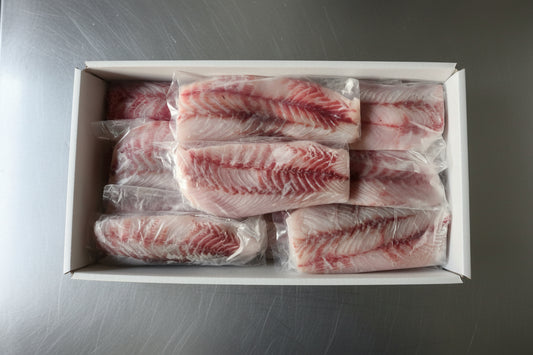
Professionally snap frozen barramundi is usually portioned and packed in a way that keeps air away and protects the surface. That kind of packaging is designed to handle long, cold storage without burning, drying or bruising the fillets.
Freezer Settings, Storage Time, and Thawing Blunders
Home freezers often sit too warm, or the temperature swings every time the door is opened in hot weather. For barramundi, you really want a steady minus 18 degrees Celsius or colder. Warmer settings mean faster quality loss, even though the fish still looks hard frozen.
A few storage and thawing traps to avoid:
- Keeping fish in the freezer for too long
- Freezers that run too warm or fluctuate
- Thawing on the bench
- Thawing in hot or warm water
Home-frozen barramundi usually keeps decent quality for a shorter time than professionally snap frozen fish. Past that point, it might still be safe if handled well, but the flavour and texture will slowly slide.
Thawing on the bench in summer is very risky. The surface of the fillet warms quickly while the centre stays frozen. Bacteria love that warm, damp surface. Hot water baths are even worse, and they start cooking the thin parts of the fillet before the middle has thawed.
Better choices are simple. The safest method is to thaw barramundi overnight in the fridge on a plate or tray. If you are short on time, use a sealed bag in a bowl of cold water, changing the water now and then to keep it cool.
Simple at-Home Steps That Protect Texture and Flavour
You can get much closer to snap frozen results at home by tightening up your routine just a little. Here is a simple method many people find helpful:
- Pat fillets dry with paper towel
- Pre-chill in the fridge for a short time
- Portion into meal-sized lots
- Wrap each portion tightly and remove as much air as possible
- Label with the date and type of fish
Store portions at the back or bottom of the freezer, where the temperature is most stable. Try not to keep opening the door while the fish is first freezing, and use the older packs first so nothing gets forgotten in the corner.
Do quick checks before cooking:
- Dry, white or grey patches on the surface
- Thick ice build-up inside the pack
- Strong, sour or strange smells after thawing
If something looks or smells wrong, it is safer not to eat it. A simple vacuum sealer, a few airtight containers and a basic freezer thermometer can all help you get closer to the consistent results of professionally snap frozen barramundi.
Enjoy Barramundi at Its Best with Less Work and More Certainty
Wild-caught barramundi is special, and it takes care to keep it that way. Slow home freezing, warm kitchen benches and loose packaging can turn a premium fillet into a bland, mushy let down. Snap frozen barramundi removes most of that risk by locking in texture and flavour right from the start.
At DragonPearl Seafoods, we are a family-run operation supplying sustainably wild-caught barramundi and king threadfin salmon from the Gulf of Carpentaria. Our fish is professionally snap frozen and packed in convenient bulk boxes so you can enjoy reliable quality from freezer to frypan with far less effort.
Bring Restaurant-Quality Barramundi To Your Kitchen Today
Experience the clean flavour and reliable quality of our snap frozen barramundi, packed for convenient use in busy Australian kitchens. At DragonPearl Seafoods, we carefully prepare and freeze each fillet at peak freshness so you can plate up consistent, premium seafood every time. If you have questions about ordering, storage or wholesale options, simply contact us and we will help you choose the right solution for your menu or home cooking.